
Taking action for a positive and lasting impact
Doing our part and working together to collectively resolve crises, that is our purpose. Every day, we put this into practice by providing high-quality service based on trust, working closely with local communities, and upholding our social and environmental commitments.


The requirement for extended corporate responsibility
In carrying out our business, the human qualities and technological resources we deploy to help people in difficulty or vulnerable situations inherently embody this requirement for extended corporate responsibility, beyond our legal obligations and economic performance.
By placing CSR and employee engagement at the heart of our strategic plans, we are affirming our desire to be a responsible player with a positive impact and to actively contribute to shaping a fairer and more sustainable society.
In a world undergoing profound change, marked by the intensification of certain risks (climatic, social, technological, etc.), and aware of the challenges facing companies in the ‘insurance-assistance’ sector, our ambition is based on three areas:
- accelerating our transition by integrating environmental, social and governance issues into the heart of our business lines,
- supporting employees and engaging them in this transformation process,
- responding to the gradual strengthening of regulatory obligations and ensuring greater transparency towards our ecosystem, regulators and civil society.
Meeting these challenges requires the full involvement of our governance and all our stakeholders (shareholders, partners, beneficiaries, employees, etc.) to support our Group and its ecosystem in this transition.

Controlling our direct impact on the environment
As a service company and provider of assistance solutions, our direct impact on the environment is mainly linked to our internal operations: management of our property portfolio, energy and resource consumption, waste, purchasing policy and business travel. Keen to reduce our ecological footprint, we have been making significant efforts for several years to improve the energy performance of our sites, install water and energy-saving devices, deploy economical printing solutions, digitise paper flows and encourage more widespread energy efficiency.
An advanced waste sorting system contributes to our efforts to promote the circular economy by recycling IT and telephone equipment and office supplies through approved channels.
Measuring and mitigating our impact in the course of our business activitie
Beyond this well-controlled scope, we want to play our part in combating climate change and prepare for its consequences on our activities and those of our shareholders and customers, particularly in the insurance sector, where the intensification of extreme weather events has a direct impact on the frequency and severity of claims.
In fact, our greenhouse gas reports confirm year after year that our Mobility and Home assistance activities account for the lion's share of our GHG emissions, as these are among the most polluting sectors and, by their very nature, contribute to climate change. Our medium- and long-term decarbonisation programme aims to support the transport and construction sectors in moving towards alternative solutions: soft mobility, the circular economy and resilient housing. It is based on a number of levers:
- identifying ways to decarbonise our activities based on a detailed analysis of our main GHG emission sources.
- for Mobility: encouraging the implementation of lower GHG emission methods of intervention and repatriation by working with our partners (networks of service providers and start-ups in particular) to promote the use of trains, electric vehicles, the deployment of and access to charging stations, etc.
- for Home: offering energy renovation services, remote assessments that limit the need for experts to travel, incentives for repairs rather than replacements, connected homes and other solutions that contribute to greater housing resilience and reduced GHG emissions.
- working with our partners (shareholders, customers, service providers) to develop offerings that reconcile sustainability issues with the Group's socio-economic sustainability.
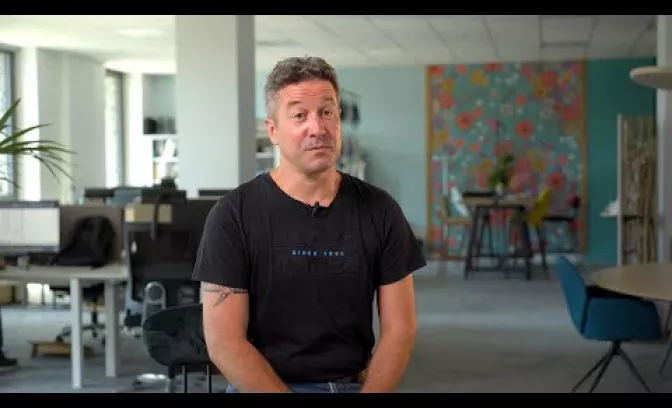
Energy efficiency
Nicolas Picard, HVAC/BMS* project manager, talks to us about energy consumption control and the measures implemented within the IMA Group. These measures enable us to largely meet the expectations recommended by the government.
*Heating, Ventilation, Air Conditioning / Centralised Technical Management